
What Plants Have Been Used for Smoking?

Plants Used for Smoking
There are many plants around the world used for smoking. The chemical compounds they contain can affect the human body in various ways. This list contains plants that are smoked. The history of smoking dates back to as early as 5000 BC. Over 1,300 different species of plants have since been smoked or smudged for medicinal, cultural, and self-indulgent purposes. Herbal Smoke Blends are available now. We have partnered with Dropping Seeds and offer a full line of Herbal Blends for Teas, Smoke, and More!
Source context: the broader ethnobotanical survey reviewed for this update catalogs 1,460 plant taxa and describes evidence that human use of plant-derived smoke may extend much further back than 5000 BC. The historical wording above is retained from the original Jungle Blunts page; the individual entries below distinguish direct smoking records from broader smoke, incense, or fumigation records.
Humans have used plant-derived smoke for far more than tobacco. Across different cultures and periods, leaves, flowers, bark, roots, seeds, resins, and other plant materials have been burned for ceremony, recreation, fragrance, preservation, pest control, and traditional medicine. Pennacchio, Jefferson, and Havens documented 1,460 plant taxa and 2,383 ethnobotanical smoke uses from 125 countries, showing just how broad the history of plant smoke really is.
The plants on this page do not all have the same evidence behind them. Some have strong documentation of being deliberately smoked. Others were burned so the smoke could be inhaled, used as incense, or added to traditional smoking mixtures. A few were included in older smoking-plant lists even though the specific smoking route is difficult to verify today.
That distinction matters. Historical use does not establish that a plant is safe to inhale. Burning changes plant chemistry, and some species below contain potent or potentially toxic constituents. Even the primary ethnobotanical source used for this article explicitly states that its work is historical and scientific documentation, not a preparation or use guide.
Looking for the practical side of herbal blends?
Read: A Guide to Herbal Smoking Blends
Learn how leaves, flowers, bark, roots, seeds, and aromatic botanicals have historically been dried, prepared, and combined, how to think about texture and moisture, and why exact botanical identification comes before preparation.
How to Read the Evidence Labels
DOCUMENTED SMOKING means the source record specifically describes people smoking the plant or adding it to a smoking mixture.
DOCUMENTED SMOKE USE means the plant was burned and the smoke was intentionally used or inhaled, but not necessarily smoked from a pipe, cigar, cigarette, or similar form.
SECONDARY OR MODERN SMOKING REPORT means a later source reports smoking use, but the historical record is not as strong as it is for the best-documented plants on this page.
SMOKING EVIDENCE LIMITED means we found botanical or ethnobotanical information about the plant, but not enough reliable evidence to confidently say that the exact species was traditionally smoked.
CAUTION means the plant has chemistry or toxicological concerns that make it especially inappropriate to treat its historical use as a modern recommendation.
1. Alpine Bearberry
Arctous alpina (L.) Nied. (Ericaceae)
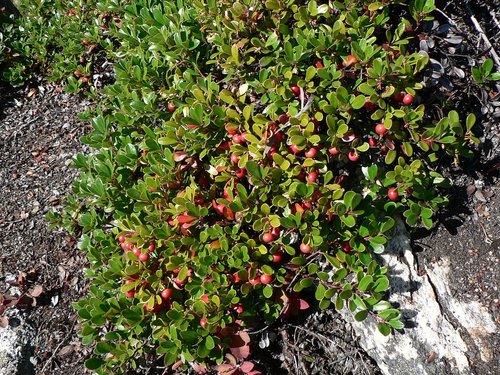
Legacy name on the original Jungle Blunts article: Arctostaphylos alpina Spreng.
Evidence: DOCUMENTED SMOKING
Alpine bearberry is a low-growing subarctic and subalpine shrub distributed across northern parts of North America, Europe, and Asia. Modern botanical authorities now accept the name Arctous alpina, while Arctostaphylos alpina is retained as an older synonym. That taxonomic update is worth showing because the older name is the one found in much of the historical literature.
Its smoking history is unusually well documented. Pennacchio and colleagues summarize early reports from Quebec and the Hudson Bay region describing the herb being smoked for pleasure. Around the Great Lakes, dried leaves were powdered and mixed with tobacco, and other accounts describe dried leaves being combined with tobacco or red-osier dogwood in smoking mixtures. The source also records Parry Island shamans near Lake Huron smoking the leaves during religious healing ceremonies.
This is therefore not simply a plant that appeared on a modern internet list. There is a substantial historical record of the leaves being deliberately prepared and smoked in several North American traditions. The historical medicinal or ceremonial purposes reported by those sources should be understood as ethnobotanical history rather than modern therapeutic claims.
Sources: Pennacchio, Jefferson & Havens (2010); Jenness (1935); Kew Plants of the World Online.
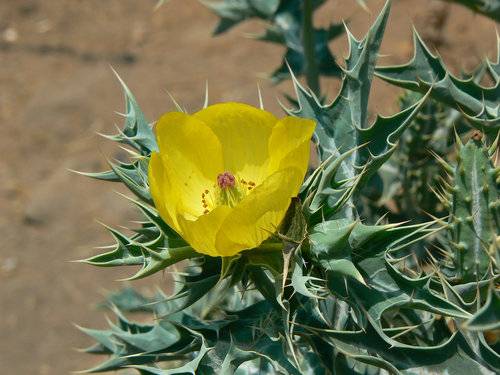
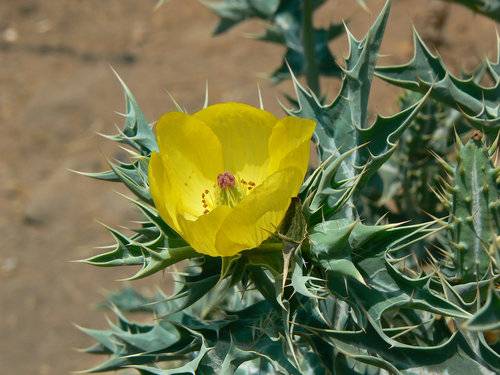
2. Mexican Prickly Poppy
Argemone mexicana L. (Papaveraceae)
Evidence: DOCUMENTED SMOKING | CAUTION
Mexican prickly poppy is a spiny, yellow-flowered member of the poppy family that has a long history in traditional medicine and ethnobotany. Its appearance on a smoking-plants list is supported by specific historical reports rather than by its botanical family alone.
Pennacchio and colleagues record several smoke-related uses. One account reported seeds being smoked in an African American magical tradition. In Mexico, smoke from burning seeds was used as a fumigant in a traditional toothache practice. Most relevant to the original Jungle Blunts article, people in southern Peru's Urubamba Valley reported that foreigners smoked the flowers as a substitute for cannabis.
This plant also deserves a prominent caution. Argemone mexicana seeds contain biologically active benzophenanthridine alkaloids, including sanguinarine, and contamination of edible oils with argemone seed oil has caused serious human poisoning outbreaks. That toxicology does not tell us what every historical smoking practice did, but it makes one thing clear: a traditional record is not a safety endorsement.
Keep this plant in the directory because the smoking history is real. Do not include it in the practical DIY blend section.
Sources: Pennacchio, Jefferson & Havens (2010); Franquemont et al. (1990); Sharma et al. and related epidemic-dropsy toxicology literature.
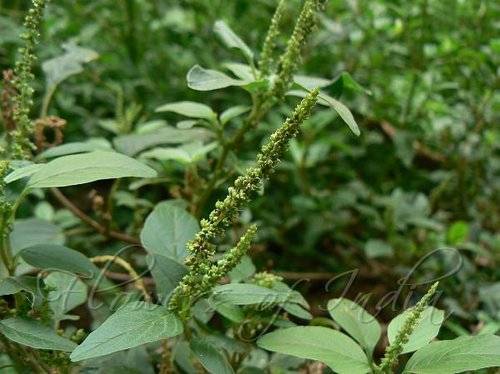
3. Slim Amaranth
Amaranthus hybridus L. subsp. hybridus (Amaranthaceae)
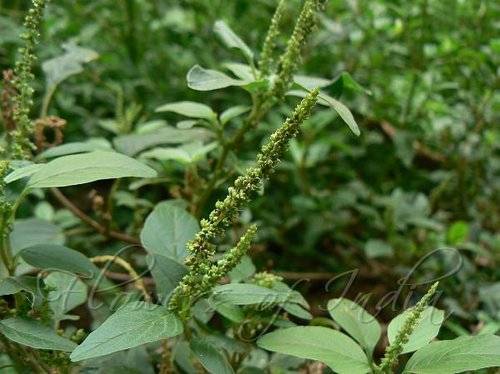
Evidence: DOCUMENTED SMOKING, SPECIFIC CULTURAL REPORT
Slim amaranth is a widespread annual amaranth with a long human relationship as a plant used in food, agriculture, and local traditions. Its smoking record is much narrower than that of tobacco, bearberry, or Leonotis, but the record is specific enough to preserve.
The original Jungle Blunts entry comes from an ethnobotanical survey in Bulamogi County, Uganda. That source recorded men smoking the leaves in a pipe made from banana stem in a particular social context connected with divorce. Pennacchio and colleagues preserved that unusual report in their global survey of plant-derived smoke.
The important point here is scale. One documented cultural practice should not be rewritten as "amaranth has traditionally been smoked around the world." The evidence supports a specific reported use in a specific community. That is still valuable ethnobotanical information, especially because it shows how plant smoke can have social and ritual meaning beyond simple recreation.
This entry should remain concise and precise, with the original Tabuti citation attached.
Sources: Tabuti et al. (2003); Pennacchio, Jefferson & Havens (2010).
4. Arnica / Mountain Tobacco
Arnica montana L. (Asteraceae)
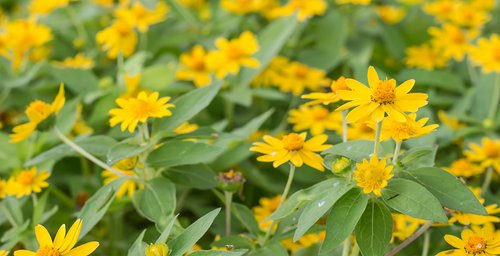
Evidence: HISTORICAL TOBACCO ASSOCIATION | SMOKING EVIDENCE MODERATE
Arnica montana is a European mountain plant best known today for its long history in herbal preparations, especially preparations made from the flowers. One of its traditional English names, however, is "mountain tobacco," which points to a less familiar part of its history.
Historical botanical and pharmacognostic sources associate dried Arnica leaves with tobacco substitution in parts of Europe. Modern institutional sources, including USDA's Dr. Duke database and Kew's Medicinal Plant Names Services, preserve "mountain tobacco" as a recognized common name for Arnica montana. The evidence for this use is older and less detailed than the ethnographic records for plants such as alpine bearberry, red-osier dogwood, or Leonotis leonurus, so the article should not overstate it.
Arnica is also chemically active. Modern research focuses primarily on its flowers, extracts, and sesquiterpene lactones, not on inhaled smoke. That is exactly why this entry should distinguish the historical tobacco association from modern pharmacology.
The useful fact is the history of the name and tobacco-substitute tradition, not a claim that smoking Arnica provides the effects studied in Arnica extracts.
Sources: USDA Dr. Duke's Phytochemical and Ethnobotanical Databases; Kew Medicinal Plant Names Services; EMA Arnica monograph; Kriplani et al. (2017).
5. Baybean / Beach Bean
Canavalia rosea (Sw.) DC. (Fabaceae)
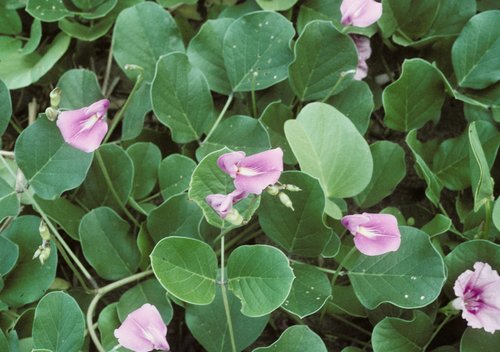
Legacy name on the original Jungle Blunts article: Canavalia maritima
Evidence: SMOKING EVIDENCE LIMITED
Baybean is a sprawling tropical coastal legume adapted to beaches, dunes, salt spray, and other exposed shoreline environments. It occurs across tropical and subtropical coasts worldwide, including the Philippines. The name Canavalia maritima appears widely in older literature, but current botanical databases generally accept Canavalia rosea.
The species has genuine ethnobotanical interest. Kew records food, medicinal, social, environmental, and poison-related uses, and regional botanical sources document a long human relationship with the plant. What is much harder to establish is the exact smoking history implied by its place on the old Jungle Blunts page.
During this review, no strong primary ethnographic source was located showing a well-defined traditional practice of smoking Canavalia rosea comparable with the direct records for bearberry, red-osier dogwood, Leonotis leonurus, or Lobelia inflata. Modern psychoactive-plant websites make claims about baybean, but those are not strong enough to convert into historical fact.
The correct treatment is to keep the plant as an evidence-limited legacy entry and say exactly that. An honest "we could not verify the smoking route" is stronger than repeating an unsupported internet claim.
Sources: Kew Plants of the World Online; PROSEA/Plant Resources of South-East Asia. Smoking route: not independently substantiated in the sources reviewed.
6. Night-Blooming Jasmine
Cestrum nocturnum L. (Solanaceae)
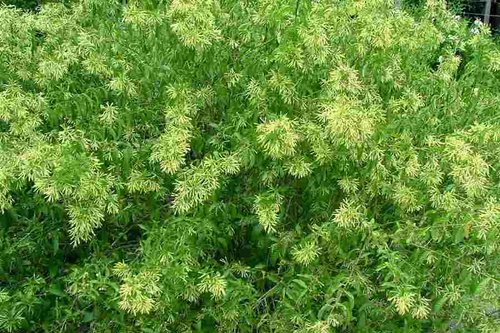
Common names: Night-blooming jasmine, lady of the night
Evidence: SMOKING EVIDENCE LIMITED | TAXONOMIC/SOURCE CORRECTION | CAUTION
Night-blooming jasmine is a tropical American shrub famous for the intense fragrance of its flowers after dark. It is now cultivated and naturalized throughout many tropical regions, including the Philippines. Kew recognizes Cestrum nocturnum as an accepted species and records both medicinal and poison-related uses.
This entry revealed an important problem in the old smoking-plants list. Pennacchio's book does document smoking in the genus Cestrum, but the species it names are Cestrum laevigatum and Cestrum parqui. The book reports Mapuche use of dried leaves of those species when cannabis was unavailable. It does not provide the same smoking record for Cestrum nocturnum.
That means the old page may have blended the common name "lady of the night" with the wrong Cestrum species. We should correct that rather than silently carrying the error forward.
Keep Cestrum nocturnum in the article only as an evidence-correction entry. Make clear that related Cestrum species have documented smoking histories, but the exact species on the old page is not verified as one of them. Because Cestrum also includes toxic species and Kew records poison use for C. nocturnum, it should not appear in the practical blending guide.
Sources: Pennacchio, Jefferson & Havens (2010); Kew Plants of the World Online.
7. Damiana
Turnera diffusa Willd. ex Schult. (Passifloraceae)
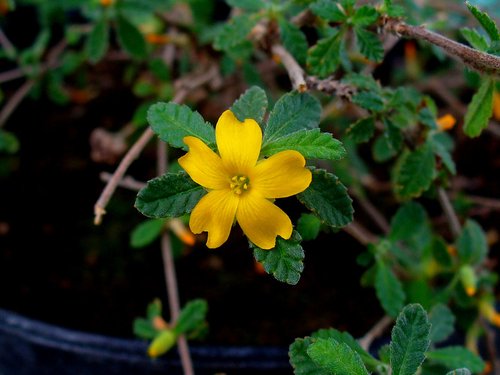
Evidence: SECONDARY DOCUMENTED SMOKING | STRONG TRADITIONAL BOTANICAL HISTORY
Damiana is an aromatic shrub native from the southern United States through Mexico, Central America, parts of the Caribbean, and portions of South America. It has a long and well-documented place in Mexican and Central American herbal traditions, and its leaves remain one of the better-known botanicals in contemporary herbal culture.
Pennacchio and colleagues cite a secondary source describing dried Damiana leaves being smoked for their aroma and relaxing character. That gives the plant a clearer smoke-related record than many of the evidence-limited entries on this page, although it is still not the same kind of deep ethnographic record seen with tobacco or kinnikinnick ingredients.
The scientific literature on Turnera diffusa mainly concerns the plant's phytochemistry, extracts, and traditional preparations rather than the chemistry or effects of its smoke. That distinction should stay visible. A study of an extract does not automatically tell us what happens when dried leaves are burned and inhaled.
Damiana belongs in the article as a botanical with both substantial traditional use and reported smoking use, but the page should avoid converting its medicinal history into claims about smoking benefits.
Sources: Pennacchio, Jefferson & Havens (2010); Kew Plants of the World Online; modern reviews of Turnera diffusa ethnopharmacology.
8. Nerve Plant
Fittonia albivenis (Lindl. ex Veitch) Brummitt (Acanthaceae)
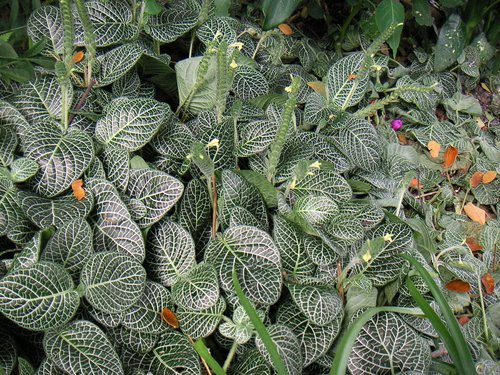
Evidence: ETHNOBOTANICAL PSYCHOACTIVE USE REPORTED | SMOKING ROUTE NOT ESTABLISHED
Most people know Fittonia albivenis as the nerve plant or mosaic plant, a small South American species grown around the world for its colorful network of leaf veins. Its traditional history is much less familiar.
Ethnobotanical accounts from the Amazon describe Fittonia in Indigenous plant knowledge, including reports of its use among Matsigenka/Machiguenga people as an admixture in visionary preparations. Those accounts make the plant relevant to the broader history of psychoactive ethnobotany.
What they do not establish is that Fittonia albivenis was traditionally smoked. The strongest material located during this review concerns ingestion or admixture in other preparations, not smoke inhalation. It therefore should not be presented simply as "a plant people smoke."
This is a good example of why the rebuilt article needs evidence labels. The plant has an interesting ethnobotanical history, but the route of use matters. Keep the entry, explain the record, and explicitly state that a traditional smoking practice for the exact species was not established from the sources reviewed.
Sources: Kew Plants of the World Online; botanical/ethnobotanical accounts of Matsigenka/Machiguenga use. Smoking route not independently verified.
9. Hops
Humulus lupulus L. (Cannabaceae)
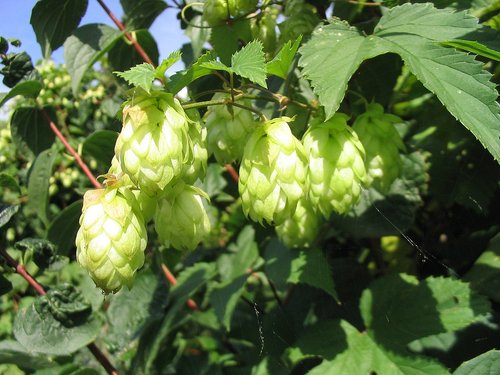
Evidence: STRONG BOTANICAL/TRADITIONAL HISTORY | HISTORICAL SMOKING EVIDENCE LIMITED
Hops are the female flower clusters of Humulus lupulus, a climbing perennial in the Cannabaceae family, the same botanical family that contains Cannabis. Hops are best known for the bitterness, aroma, and preservation qualities they contribute to beer.
The plant also has a long herbal history. A major review in the Journal of Ethnopharmacology documents the longstanding use of hops in traditional preparations and the extensive chemistry of the female inflorescences. Modern herbal-smoking culture also frequently places hops on lists of aromatic blend ingredients.
The evidence needs to be separated carefully. The scientific literature is rich on brewing, extracts, volatile compounds, and oral herbal preparations, but strong primary evidence for a widespread historical smoking tradition was not located during this review. Being in the same family as cannabis does not prove equivalent chemistry, use, or effects.
Hops can remain in the directory as a plant with a long human history that later entered herbal-smoking culture, but the article should not pretend that extract research proves anything about inhaled hop smoke.
Sources: Zanoli & Zavatti (2008), Journal of Ethnopharmacology; Kew Plants of the World Online.
10. Lion's Tail / Wild Dagga
Leonotis leonurus (L.) R.Br. (Lamiaceae)
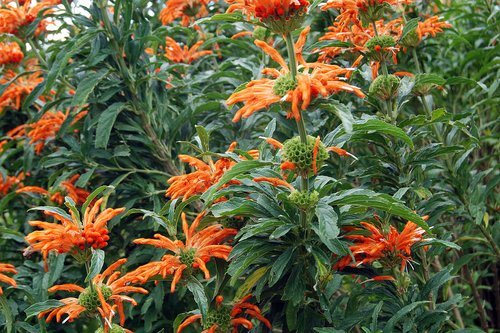
Evidence: DOCUMENTED SMOKING | STRONG
Leonotis leonurus is one of the clearest examples on this page of a plant with a genuine and repeatedly documented smoking tradition. Native to southern Africa, it is widely known as lion's tail and wild dagga.
Historical sources summarized by Pennacchio and modern ethnopharmacological reviews describe southern African peoples smoking the leaves, flowering tops, or resinous material for recreational, ceremonial, and traditional medicinal purposes. These accounts are not simply modern herbal-shop lore. They form part of a much older ethnobotanical record.
The scientific evidence has become unusually specific. A 2015 Journal of Ethnopharmacology review examined the traditional use and phytochemistry of Leonotis leonurus. In 2024, researchers went a step further and actually combusted aerial plant material, collected the smoke, and chemically examined constituents of the resulting smoke extract. Very few plants in the broader ethnobotanical smoke literature have been studied at that level.
That research does not establish that the smoke is safe or therapeutically effective in people. What it does establish is that Leonotis leonurus unquestionably belongs in an evidence-led history of plants that have been smoked.
Sources: Pennacchio, Jefferson & Havens (2010); Nsuala, Enslin & Viljoen (2015); Nsuala et al. (2024); Kew Plants of the World Online.
11. Siberian Motherwort / Honeyweed
Paraleonurus sibiricus (L.) M.L.Qian, C.L.Xiang & Bo Li (Lamiaceae)
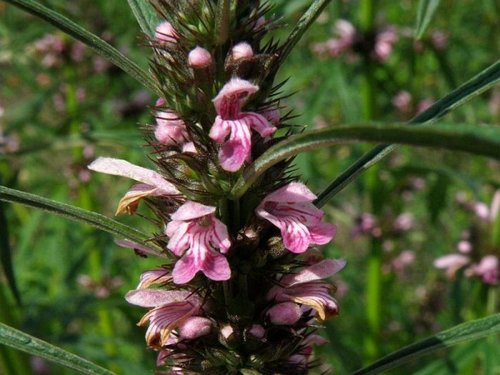
Legacy name: Leonurus sibiricus L.
Evidence: DOCUMENTED SMOKING | TAXONOMY UPDATED
This plant has recently undergone a taxonomic change. The name Leonurus sibiricus, used on the old Jungle Blunts page and throughout older literature, is now treated by Kew as a synonym of the accepted name Paraleonurus sibiricus. Its native range extends from southern Siberia into northern China, although it has been introduced far beyond that range.
The smoking history is directly relevant. Pennacchio's source, using an older spelling and classification, reports that dried leaves harvested from flowering plants were smoked in Central and South America as a cannabis substitute. The species also became associated with the common names honeyweed and, in parts of Latin America, marihuanilla.
The taxonomic history makes this a useful educational entry. Old ethnobotanical literature often preserves names that modern plant systematics later revises. The history does not disappear when the name changes, but the modern article should show both names so readers can connect the old source to the currently accepted species.
Do not turn the phrase "cannabis substitute" into a claim of equivalent chemistry or effects. It describes historical use, not pharmacological equivalence.
Sources: Pennacchio, Jefferson & Havens (2010); Kew Plants of the World Online, 2026 taxonomy.
12. Mugwort
Artemisia vulgaris L. (Asteraceae)
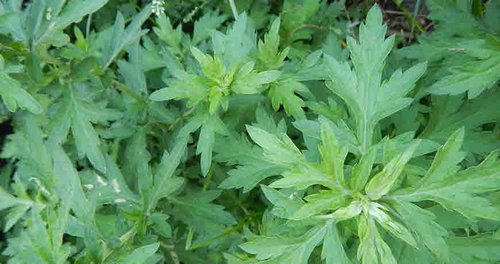
Evidence: DOCUMENTED SMOKING AND DOCUMENTED SMOKE USE
Mugwort has one of the broadest smoke-related histories on this page because the plant has been smoked, burned as incense, used as a fumigant, and employed in moxibustion traditions.
Pennacchio and colleagues record reports from China and Japan in which the leaves were smoked in traditional practices, as well as reports of mugwort being used as a tobacco substitute in parts of the Far East. Other traditions burned the plant as incense or used the smoke to repel insects. Mugwort is also closely associated with moxibustion, where processed Artemisia material is burned to produce heat and smoke in traditional East Asian practice.
Those practices are not interchangeable. Smoking leaf material, inhaling ambient smoke, and using moxa near the body are different exposures. The rebuilt article should preserve that distinction rather than collapsing all of them into "mugwort is a smoking herb."
Mugwort is therefore a strong example of a plant whose relationship with smoke extends across recreational, ritual, practical, and traditional medicinal contexts.
Sources: Pennacchio, Jefferson & Havens (2010); modern moxibustion-smoke research; Kew Plants of the World Online.
13. Cannabis
Cannabis sativa L. and the broader Cannabis complex (Cannabaceae)
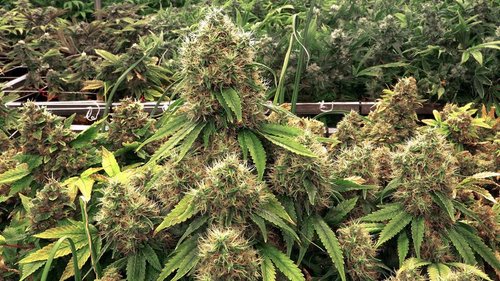
Evidence: DOCUMENTED SMOKING | VERY STRONG
Cannabis is one of the world's best-documented plants associated with intentional smoke inhalation, but its history reaches far beyond modern joints, pipes, and vaporizers. Humans have used Cannabis for fiber, seed, food, ritual, medicine, and psychoactive purposes for thousands of years.
A particularly important archaeological discovery comes from the Jirzankal Cemetery in the eastern Pamir Mountains. In a 2019 Science Advances study, researchers chemically analyzed residues from wooden braziers dating to around 500 BCE and found cannabinoid signatures consistent with cannabis being intentionally burned during mortuary ceremonies. The findings provide some of the earliest directly dated and scientifically verified evidence of ritual cannabis smoking or smoke inhalation.
Cannabis contains many plant compounds, including cannabinoids such as THC and CBD, but this page is not the place to turn that chemistry into medical or product claims. Its role here is historical and ethnobotanical: cannabis demonstrates that deliberate inhalation of plant smoke has deep cultural roots and that archaeological chemistry can sometimes verify practices once known only through texts or oral history.
Sources: Ren et al. (2019), Science Advances, DOI 10.1126/sciadv.aaw1391; Pennacchio, Jefferson & Havens (2010).
14. Wild Comfrey
Andersonglossum virginianum (L.) J.I.Cohen (Boraginaceae)
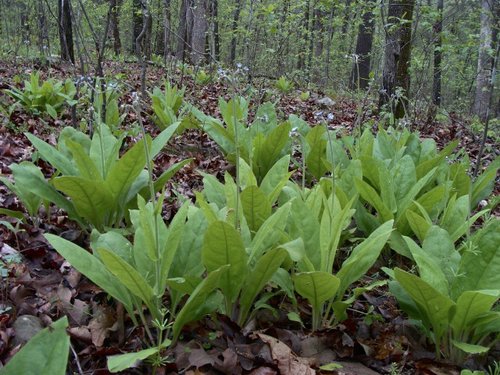
Legacy name: Cynoglossum virginianum L.
Evidence: SMOKING EVIDENCE LIMITED | TAXONOMY UPDATED
The plant listed on the old Jungle Blunts page as Cynoglossum virginianum has been moved taxonomically. Kew now accepts the name Andersonglossum virginianum. It is a perennial woodland plant native to central and eastern North America.
The smoking history for the exact species is weak. During this review, we did not locate a strong primary ethnographic record showing A. virginianum being routinely smoked or used in a defined smoke tradition. That matters because older smoking-plant lists sometimes group plants by genus, common name, or secondary references in ways that do not survive closer source checking.
The borage family also includes plants with very different alkaloid profiles. Chemistry or toxicity demonstrated in another Cynoglossum species should not simply be assigned to A. virginianum without species-specific evidence.
The best editorial treatment is therefore transparent: preserve the legacy entry and its old name for historical continuity, update the taxonomy, and label the smoking route as unverified rather than inventing a story around it.
Sources: Kew Plants of the World Online. Smoking route for the exact species: not independently substantiated in the sources reviewed.
15. African Dream Herb / Snuff Box Sea Bean
Entada rheedei Spreng. (Fabaceae)
Legacy spelling often seen: Entada rheedii
Evidence: DOCUMENTED SMOKING TRADITION | PSYCHOACTIVE ETHNOBOTANY
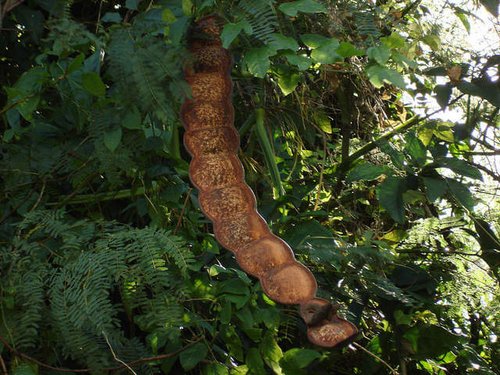
Entada rheedei is a huge tropical liana whose woody pods can reach extraordinary sizes. Its hard, buoyant seeds are dispersed by water and occur across much of the tropical and subtropical Old World, including Africa, Asia, Australia, and the Philippines.
The plant has a documented connection with dream-related traditional practice in southern Africa. South Africa's national botanical authority, SANBI, records its use by traditional healers in practices intended to induce vivid dreams and facilitate communication with ancestors. The same source records prepared seed material being smoked as part of that tradition.
That makes Entada rheedei a genuine smoking-ethnobotany entry rather than a modern internet invention. At the same time, formal clinical evidence on inhaled Entada is extremely limited, and SANBI also notes that the seeds contain secondary metabolites important enough that traditional food preparation in Australia involved extensive processing.
The article should document the dream-related smoking tradition without publishing a recipe, dose, or instructions for reproducing psychoactive use.
Sources: SANBI PlantZAfrica; Kew Plants of the World Online.
16. Star of Bethlehem
Hippobroma longiflora (L.) G.Don (Campanulaceae)
Evidence: SMOKING EVIDENCE LIMITED | CAUTION
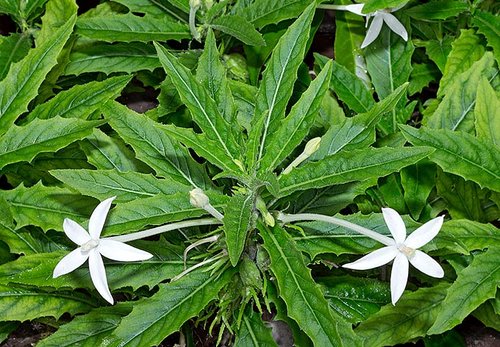
Hippobroma longiflora is a tropical flowering plant native to Jamaica and now naturalized throughout many tropical regions. Its long, narrow white flowers make it an attractive ornamental, but its chemistry is more consequential than its appearance suggests.
The plant appears on older psychoactive and smoking-plant lists, including the legacy Jungle Blunts article, but this review did not locate strong evidence of a defined traditional smoking practice for the exact species. What modern research does document is a complex alkaloid profile. A 2023 Planta Medica study isolated several piperidine alkaloids from Hippobroma longiflora, including lobeline-related compounds and newly characterized molecules.
Kew also records the plant as having poison-related as well as medicinal uses. That combination makes it inappropriate to turn a weak historical-list association into a modern preparation recommendation.
Keep the plant in the directory as an example of why evidence quality matters. A plant can be ethnobotanically interesting and chemically active without belonging in a practical herbal smoking blend.
Sources: Kew Plants of the World Online; Chen et al. (2023), Planta Medica.
17. Wild Lettuce / "Opium Lettuce"
Lactuca virosa L. (Asteraceae)
Evidence: HISTORICAL HERBAL USE STRONG | SMOKING HISTORY WEAK | CAUTION
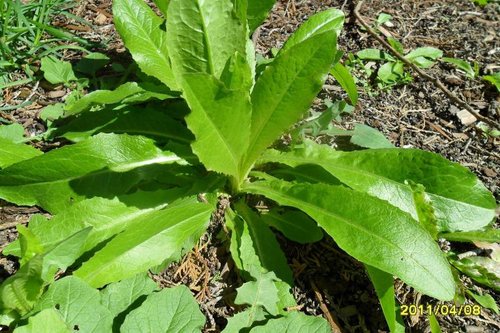
Lactuca virosa is a European and North African wild lettuce famous for the milky latex that exudes when the plant is cut. When that latex is dried it forms a brown material historically known as lactucarium. Nineteenth-century herbal medicine made lactucarium famous enough that wild lettuce acquired the nickname "opium lettuce."
The nickname is easy to misunderstand. Wild lettuce is not opium and does not contain morphine. Historical medicinal use centered largely on lactucarium and other preparations rather than on a well-documented tradition of smoking the dried leaf.
Modern herbal and alternative-smoking culture often includes wild lettuce, but that should not be backdated into a smoking history we cannot substantiate. There is also modern clinical evidence that Lactuca virosa can cause toxicity when consumed in significant amounts; a published case series described neurological, gastrointestinal, and autonomic symptoms in exposed patients.
The correct entry is therefore about the plant's real lactucarium history, the origin of the "opium lettuce" name, and the gap between that history and claims about smoking it.
Sources: Besharat, Besharat & Jabbari (2009), BMJ Case Reports; Kew Plants of the World Online.
18. Cardinal Flower
Lobelia cardinalis L. (Campanulaceae)
Evidence: SECONDARY SMOKING REPORT | CAUTION
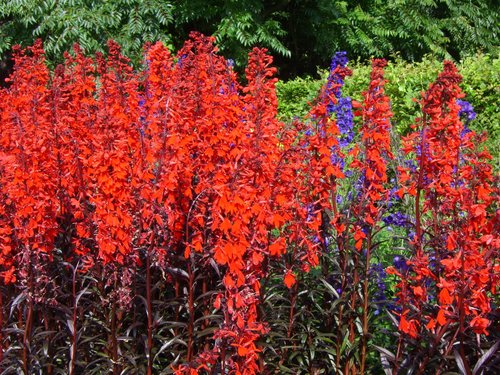
Cardinal flower is a North American Lobelia known for its vivid red flowers. It belongs to the same genus as Lobelia inflata, the much better documented "Indian tobacco," but the two species should not be treated as interchangeable.
Pennacchio and colleagues cite a secondary source suggesting that dried leaves and flowers of Lobelia cardinalis have been mixed with other herbs and smoked for pleasure. That supports keeping it on the page, but the evidence is not equivalent to the detailed Indigenous and historical records available for Lobelia inflata.
This distinction matters chemically as well. Lobelia species contain biologically active piperidine alkaloids, but the exact alkaloid profile differs among species. A claim established for L. inflata should not automatically be transferred to L. cardinalis.
Present cardinal flower as a plant with a secondary smoking report, not as a broadly established traditional tobacco substitute. Do not reproduce old dose language or turn historical herbal uses into modern smoking-benefit claims.
Sources: Pennacchio, Jefferson & Havens (2010); modern reviews of Lobelia phytochemistry and ethnobotany.
19. Great Blue Lobelia
Lobelia siphilitica L. (Campanulaceae)
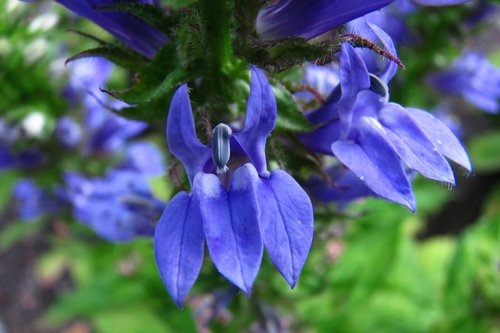
Evidence: TRADITIONAL BOTANICAL USE DOCUMENTED | SMOKING EVIDENCE LIMITED | CAUTION
Great blue lobelia is a North American perennial with blue-violet flowers and a long history in Indigenous and early American plant use. Its species name preserves part of that historical medicinal reputation, although modern readers should not interpret the name as evidence of clinical effectiveness.
The plant appears on broader lists of smoking botanicals, but the source record for smoking Lobelia siphilitica is much weaker than the record for Lobelia inflata. Pennacchio's smoke compendium does not provide the same direct smoking narrative for this species.
Modern chemistry confirms another reason to keep the species separate. Researchers have isolated piperidine and tetrahydropyridine alkaloids from Lobelia siphilitica, demonstrating that it is chemically active in its own right. That does not tell us that smoking it is safe or that it behaves like L. inflata.
This entry should therefore focus on the difference between genus-level reputation and species-level evidence. The old page can keep the plant, but the rebuilt version should explicitly mark the smoking route as insufficiently established.
Sources: Kew Plants of the World Online; piperidine-alkaloid research on Lobelia siphilitica; smoking route not independently substantiated.
20. Mexican Dream Herb
Calea ternifolia Kunth (Asteraceae)
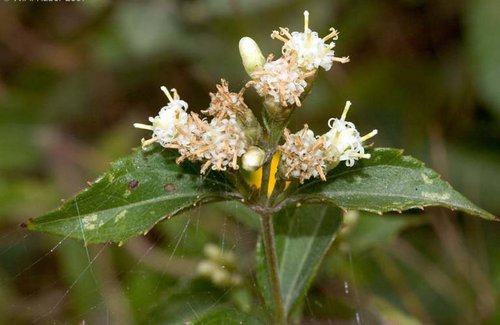
Legacy name: Calea zacatechichi Schltdl.
Evidence: STRONG DREAM/DIVINATION ETHNOBOTANY | SMOKING ROUTE REQUIRES CAREFUL WORDING
The plant widely known as Calea zacatechichi is now treated by Kew as a synonym of Calea ternifolia. It is native from Mexico into Central America and northern South America and is one of the best-known plants associated with dream-related ethnobotany.
Pennacchio's source records Chontal use of the plant in connection with fevers, nausea, and communication with spirits. In 1986, researchers conducted a controlled psychopharmacological study of Calea and reported changes in sleep-related measurements and hypnagogic imagery after administration of plant preparations.
The route matters. That study concerned extracts or preparations, not the safety or chemistry of smoke from burning Calea. Modern "dream herb" culture often includes smoking, but the scientific evidence should not be rewritten as proof that smoking produces the same results.
This is a strong ethnobotanical entry because the dream tradition itself is well documented. The article should preserve that history while keeping smoke-specific claims within the limits of the evidence.
Sources: Pennacchio, Jefferson & Havens (2010); Mayagoitia, Díaz & Contreras (1986), Journal of Ethnopharmacology; Kew Plants of the World Online.
21. Guarumo / Cecropia
Cecropia obtusifolia Bertol. (Urticaceae)
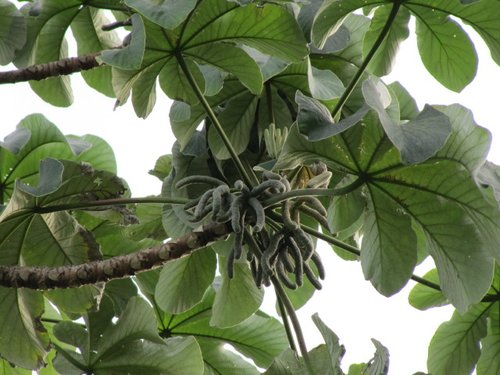
Legacy name on the old page: Cecropia mexicana
Evidence: DOCUMENTED SMOKING | TAXONOMY UPDATED
The old Jungle Blunts page lists Cecropia mexicana. Current Kew taxonomy treats that name as a synonym of Cecropia obtusifolia, a fast-growing tropical American tree with large palmate leaves and hollow stems.
The smoking evidence is direct. Pennacchio and colleagues report that people in the Darién region of Panama and other areas from Mexico to Colombia smoked the leaves and stems of Cecropia obtusifolia for recreational purposes. The same source documents a related species, Cecropia peltata, whose dried leaves were powdered and smoked by chicleros and supervisors in Belize, with other smoking records from Isthmian America.
This is a useful example of why taxonomy should be updated without erasing history. The old name led us to the right botanical lineage, and the accepted name connects directly to a documented smoking tradition.
Use the accepted name in the heading, show Cecropia mexicana as the legacy synonym, and preserve the historical source rather than sending readers to a generic encyclopedia page.
Sources: Pennacchio, Jefferson & Havens (2010); Kew Plants of the World Online.
22. Scotch Broom
Cytisus scoparius (L.) Link (Fabaceae)
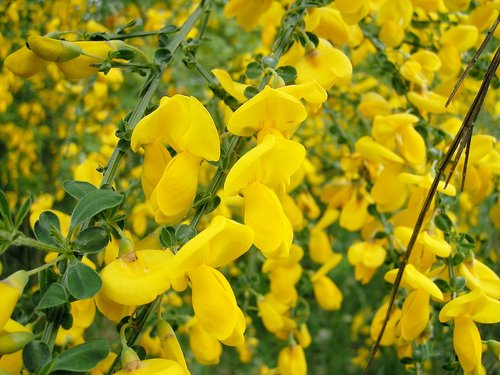
Evidence: DOCUMENTED SMOKE/FUMIGATION, NOT DOCUMENTED ORDINARY SMOKING | CAUTION
Scotch broom is a European shrub that has become invasive in many parts of the world. It belongs in the history of plant-derived smoke, but the evidence does not support presenting it as an ordinary herbal smoking ingredient.
Pennacchio's compendium records a Scottish Highland tradition in which the plant's tips were burned as a fumigant. That is a smoke use, but it is not the same as putting the plant into a pipe or rolling mixture and deliberately inhaling it.
Modern phytochemical research gives another reason to keep that distinction sharp. Cytisus scoparius contains quinolizidine alkaloids including sparteine, lupanine, and related compounds. These are biologically active molecules, not merely aroma compounds.
The rebuilt page should therefore correct the category: Scotch broom has a documented historical smoke/fumigation association, but the source reviewed here does not establish a normal smoking tradition. It should be excluded from the practical herbal-blending guide.
Sources: Pennacchio, Jefferson & Havens (2010); quinolizidine-alkaloid research on Cytisus/Sarothamnus scoparius.
23. California Poppy
Eschscholzia californica Cham. (Papaveraceae)
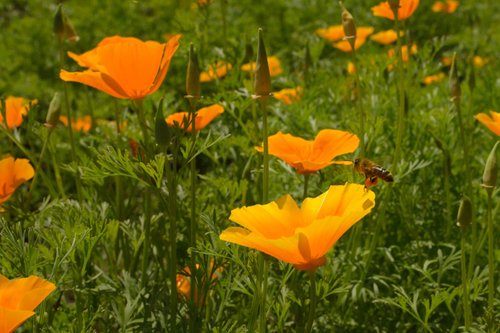
Evidence: TRADITIONAL BOTANICAL HISTORY STRONG | HISTORICAL SMOKING EVIDENCE LIMITED
California poppy is native to western North America and has a long history in Indigenous and regional herbal traditions. It is also a chemically interesting member of the poppy family, producing a diverse group of benzylisoquinoline alkaloids.
The plant is common on modern lists of herbal-smoking ingredients, but strong primary evidence for a long historical smoking tradition was not located during this review. Most modern scientific work on Eschscholzia californica concerns extracts, alkaloid chemistry, metabolism, and herbal preparations rather than inhaled smoke.
That does not make the plant irrelevant. It makes the evidence category important. California poppy can be accurately described as a traditional botanical that later entered modern herbal-smoking culture, while clearly stating that the pharmacology of extracts should not be treated as pharmacology of smoke.
This is another case where the new page should be more honest than a generic "herbs you can smoke" list. The plant's actual history and chemistry are interesting enough without inventing a smoking tradition.
Sources: modern Eschscholzia californica phytochemical literature; Kew Plants of the World Online. Historical smoking route not independently substantiated.
24. Japanese Hops
Humulus scandens (Lour.) Merr. (Cannabaceae)
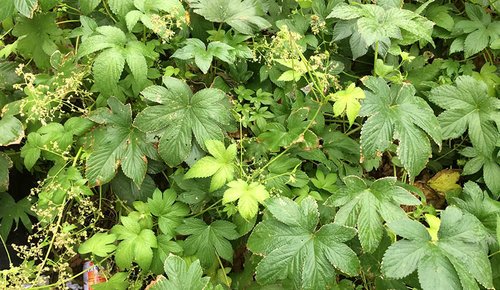
Legacy name: Humulus japonicus Siebold & Zucc.
Evidence: TRADITIONAL HERBAL USE DOCUMENTED | SMOKING EVIDENCE LIMITED | TAXONOMY UPDATED
Japanese hops is an annual climbing plant native from the Russian Far East through temperate East Asia into northern Vietnam. The name Humulus japonicus, used on the old Jungle Blunts page, is now treated by Kew as a synonym of Humulus scandens.
The species has a documented history in East Asian traditional medicine, and modern researchers continue to investigate its extracts and phytochemistry. What the current evidence does not provide is a strong historical smoking tradition.
It is tempting to assume that because Japanese hops belongs to the same genus as common hops, or the same family as cannabis, it must share those plants' smoking history. That is precisely the kind of inference the rebuilt article should avoid. Botanical relationship does not establish use, chemistry, or effect.
Keep the entry because it was on the original list and because the taxonomy itself is useful educational material. Label the smoking route as unverified unless a stronger historical source is later found.
Sources: Kew Plants of the World Online; modern reviews of Humulus scandens traditional use. Smoking route not independently substantiated.
25. Laggera alata / False Tobacco
Laggera alata (D.Don) Sch.Bip. ex Oliv. (Asteraceae)
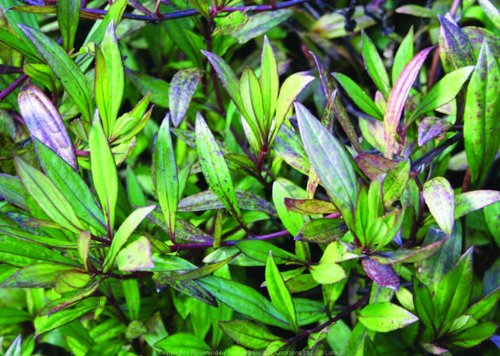
Evidence: DOCUMENTED TOBACCO-SUBSTITUTE SMOKING
Laggera alata is an aromatic member of the daisy family distributed widely through tropical and subtropical Africa and Asia, including the Philippines. It is one of the more interesting plants on this list because its common-name history points directly toward smoking.
A 2019 review in Chemistry & Biodiversity notes the plant's close resemblance to tobacco and records the name "false tobacco." The same review reports that the leaves are smoked in parts of Gabon in place of tobacco. Other ethnobotanical records describe Laggera alata in fumigation and traditional medicinal practices across Africa.
That makes the tobacco-substitute story worth preserving. It also gives Jungle Blunts a useful regional connection: the species occurs naturally in the Philippines even though the documented substitute-smoking record cited here comes from Africa.
As with every plant on this page, historical smoking use should not be converted into a safety claim or into therapeutic promises. The evidence supports that the leaves were used as a tobacco substitute. It does not prove that inhaling the smoke is harmless.
Sources: Getahun, Sharma & Gupta (2019), Chemistry & Biodiversity, DOI 10.1002/cbdv.201900131; Kew Plants of the World Online.
26. Motherwort
Leonurus cardiaca L. (Lamiaceae)
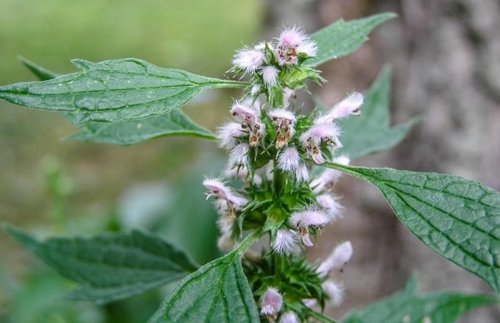
Evidence: STRONG TRADITIONAL HERBAL HISTORY | HISTORICAL SMOKING EVIDENCE LIMITED
Motherwort is a perennial mint-family plant with a long history in European and Asian herbal medicine. Modern reviews document a chemically complex aerial herb containing diterpenes, flavonoids, phenolic compounds, iridoids, nitrogen-containing compounds, and other secondary metabolites.
The old Jungle Blunts article lists motherwort among smoking plants, and the herb does appear in contemporary herbal-smoking culture. What we did not find is a strong historical smoking record comparable with Leonotis leonurus, Siberian motherwort, or Lobelia inflata.
That distinction is especially important because the scientific literature on motherwort is largely about extracts and standardized herbal preparations. Those studies cannot simply be transferred to inhaled smoke. The chemistry entering the lungs after combustion is not the same research question as the chemistry of a tea, tincture, or standardized extract.
Keep motherwort in the directory as a well-documented medicinal botanical with a later smoking-culture association, while labeling the historical smoke evidence as limited.
Sources: Wojtyniak, Szymański & Matławska (2013), Phytotherapy Research; Kew Plants of the World Online.
27. Indian Tobacco
Lobelia inflata L. (Campanulaceae)
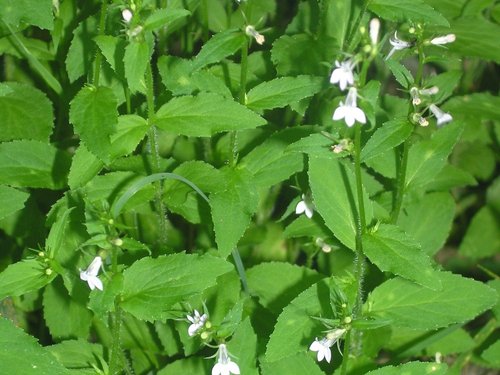
Evidence: DOCUMENTED SMOKING | STRONG | CAUTION
Lobelia inflata is one of the strongest North American examples on this page. Its common name, "Indian tobacco," reflects a genuine historical connection with smoking rather than a modern marketing name.
Pennacchio and colleagues record Hocak/Winnebago use of the leaves in ceremonies and for recreational smoking before European colonization. Other North American records describe smoke from the leaves being inhaled in traditional practices, and historical accounts also describe the plant being used as a substitute for tobacco. The Black Elk/NATIFS smoking-plants booklet likewise identifies cured and dried Lobelia inflata leaves as material used in smoking and offering mixtures.
The plant is chemically active. Its best-known alkaloid, lobeline, has been studied extensively for interactions with nicotinic systems and was historically investigated in smoking-cessation products. That pharmacology is a reason for caution, not a reason to market the plant as a harmless substitute.
Keep this as a strong documented-smoking entry, but do not reproduce old medicinal claims, doses, or preparation amounts.
Sources: Pennacchio, Jefferson & Havens (2010); Black Elk & Black Elk, All Mixed Up; modern lobeline pharmacology literature.
What This List Actually Shows
The most interesting lesson is not that "lots of herbs can be smoked." It is that humans have used plant smoke in remarkably different ways.
Some plants, including alpine bearberry, Leonotis leonurus, Siberian motherwort, cannabis, Cecropia obtusifolia, Laggera alata, and Lobelia inflata, have direct evidence of smoking traditions. Mugwort has a broader history involving both smoking and other forms of intentional plant smoke. Damiana and several other herbs have secondary or modern smoking records. Other plants on the old list turn out to have much weaker smoke evidence once the sources are checked closely.
That is why plant identity, plant part, culture, route of use, and source quality all matter.
A tea is not smoke. Incense is not a pipe. A plant extract is not combustion. A related species is not the same species. And a historical practice is not automatically a modern safety recommendation.
What Does This Have to Do With Jungle Blunts?
The history of smoking plants is much broader than tobacco, and that is one of the ideas behind Jungle Blunts.
The material around what you smoke is still a plant material worth understanding. Different leaves have different structures, origins, aromas, and histories.
At Jungle Blunts, Banana means banana leaf. Guava means guava leaf. Cacao means cacao leaf. Lomboy means Lomboy leaf.
We don't formulate a flavor. We choose a leaf.
Read the Herbal Smoking Blends Guide
Explore Herbal Smoke Blends
REFERENCES / SOURCE REGISTER FOR IMPLEMENTATION
- Pennacchio, M., Jefferson, L. V., & Havens, K. (2010). Uses and Abuses of Plant-Derived Smoke: Its Ethnobotany as Hallucinogen, Perfume, Incense, and Medicine. Oxford University Press. Owner-supplied source PDF.
- Gorlitsky, L. (2012). Review of Uses and Abuses of Plant-Derived Smoke. Journal of Medicinally Active Plants, 1(1), 44. DOI: 10.7275/R5VT1Q13. Owner-supplied source PDF.
- Black Elk, L., & Black Elk, L. All Mixed Up: Plants Used in Smoking and Offering Mixtures. NATIFS. Owner-supplied source PDF. Use for cultural/preparation context, not as modern clinical proof.
- Kew Science. Plants of the World Online. Use for current accepted botanical names and synonym relationships.
- Ren, M., et al. (2019). The origins of cannabis smoking: Chemical residue evidence from the first millennium BCE in the Pamirs. Science Advances, 5(6), eaaw1391. DOI: 10.1126/sciadv.aaw1391.
- Nsuala, B. N., Enslin, G., & Viljoen, A. (2015). "Wild cannabis": A review of the traditional use and phytochemistry of Leonotis leonurus. Journal of Ethnopharmacology, 174, 520–539.
- Nsuala et al. (2024). Study of Leonotis leonurus smoke constituents. Journal of Ethnopharmacology, 331, 118271.
- Zanoli, P., & Zavatti, M. (2008). Pharmacognostic and pharmacological profile of Humulus lupulus L. Journal of Ethnopharmacology, 116(3), 383–396. DOI: 10.1016/j.jep.2008.01.011.
- Mayagoitia, L., Díaz, J. L., & Contreras, C. M. (1986). Psychopharmacologic analysis of an alleged oneirogenic plant: Calea zacatechichi. Journal of Ethnopharmacology, 18(3), 229–243.
- Getahun, T., Sharma, V., & Gupta, N. (2019). The genus Laggera (Asteraceae): Ethnobotanical and ethnopharmacological information, chemical composition and biological activities. Chemistry & Biodiversity, 16(8), e1900131. DOI: 10.1002/cbdv.201900131.
- Wojtyniak, K., Szymański, M., & Matławska, I. (2013). Leonurus cardiaca L. (motherwort): a review of its phytochemistry and pharmacology. Phytotherapy Research, 27(8), 1115–1120. DOI: 10.1002/ptr.4850.
- Besharat, S., Besharat, M., & Jabbari, A. (2009). Wild lettuce (Lactuca virosa) toxicity. BMJ Case Reports. DOI: 10.1136/bcr.06.2008.0134.
- Chen, S.-R., et al. (2023). 2,6-Disubstituted piperidine alkaloids from Hippobroma longiflora. Planta Medica, 89(3), 308–315. DOI: 10.1055/a-1903-2663.
- SANBI PlantZAfrica. Entada rheedii/rheedei species account. Use for documented southern African dream-related smoking tradition.
- Penn State Extension / National Center for Home Food Preservation. Herb-drying guidance. Use only in the separate preparation guide, not to claim smoking safety.
- USDA Dr. Duke's Phytochemical and Ethnobotanical Databases and Kew Medicinal Plant Names Services. Arnica montana common-name record including "mountain tobacco."
- Modern Argemone mexicana toxicology literature on sanguinarine and epidemic dropsy. Use only for caution, not to infer smoke-specific dose or risk.
- Modern Cytisus scoparius phytochemical literature documenting quinolizidine alkaloids including sparteine and lupanine.
- Modern Lobelia phytochemical literature. Do not transfer evidence from one Lobelia species to another.